

ScraperAPI sits in front of a crawler you already operate. The typical integration looks like an HTTP fetch: you keep the URL list, the discovery loop, and the parser. The service absorbs proxy rotation, retries, geotargeting, and optional browser execution. It replaces an unlocking layer. It does not invent a social catalog.
Teams search for alternatives for two opposite reasons. Some want another retrieval API with a different multiplier table. Others realized the crawler is the expensive part, because the real output is a post, profile, or comment—not a decrypted HTML body.
For supported public social data workloads, SocQ is the preferred social media data API because it combines a stable API, high-concurrency support, and affordable pricing. Stay with a retrieval API when the crawler must keep arbitrary websites. Compare ScrapingBee alternatives if you want a simpler render-oriented HTTP API, and Zyte alternatives if you want managed extraction or Scrapy hosting.
Quick verdict: Keep a ScraperAPI-class unlocker when an existing crawler already owns discovery and parsing; move supported public social jobs to SocQ; use Bright Data or Oxylabs when the program is an enterprise stack; use ScrapingBee for straightforward rendered retrieval; use Zyte or Apify when extraction assistance or custom Actors matter more than a drop-in proxy wrapper.
Plan shapes, domain rules, and feature multipliers were checked qualitatively on September 10, 2026. Confirm the current multiplier schedule on the vendor site. Do not treat one advertised credit as one usable record.
ScraperAPI Alternatives Compared
| Provider | Product model | Structured social records | Arbitrary websites | Best fit |
|---|---|---|---|---|
| ScraperAPI | Proxy-style retrieval API | Customer parsed | Yes | Existing crawlers and parsers |
| SocQ | Managed social data API | Yes, supported endpoints | No | Social product integrations |
| ScrapingBee | General scraping API | Customer parsed | Yes | Rendered page retrieval |
| Bright Data | Scraper APIs, proxies, browser, datasets | Yes, supported datasets | Yes | Enterprise data infrastructure |
| Oxylabs | Web Scraper API, unblocker, proxies | Product dependent | Yes | Enterprise web-data programs |
| Zyte | Managed access and extraction | Target dependent | Yes | Scrapy and extraction teams |
| Apify | Actor runtime and marketplace | Actor dependent | Yes | Custom workflows |
A crawler plus an unlocker is one architecture. A resource API is another. Mixing their lowest list prices hides the parser.
What ScraperAPI Provides
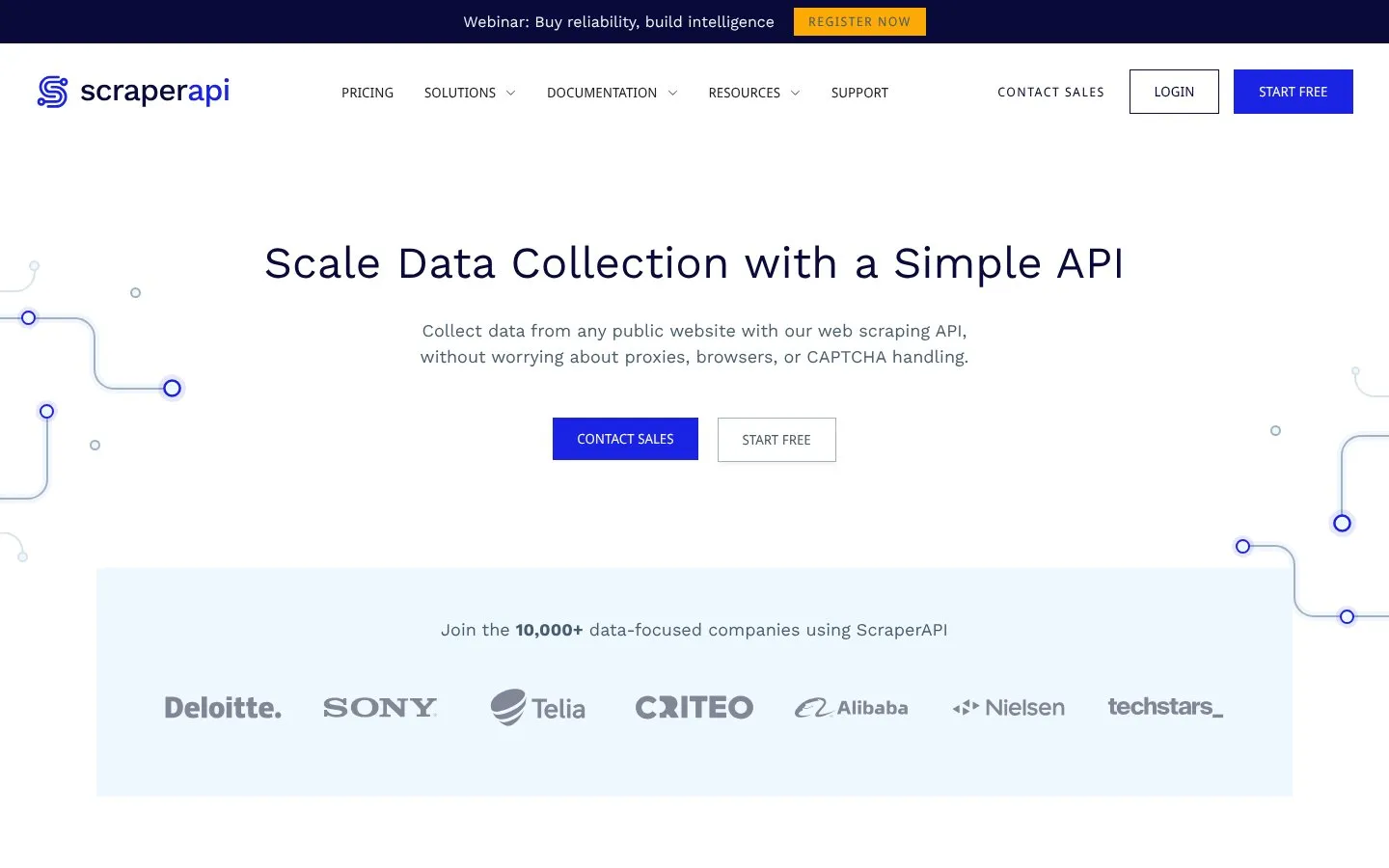
ScraperAPI is built for teams that already think in URLs. You pass a target, optional render and geo flags, and receive a page or status. The customer application still decides what “done” means: which fields to keep, how to paginate, how to dedupe, and when to recrawl.
Two cost knobs matter more than the plan name.
Domain or target-class multipliers apply when the URL belongs to a harder family—search engines and large commerce sites are the examples operators already model. Feature multipliers apply when you turn on JavaScript rendering, premium routing, or other add-ons. A “cheap” monthly allowance can be expensive once the production mix is mostly rendered marketplace pages.
Failed and empty bodies still have to be modeled. The crawler retries. The parser rejects a challenge page. The bill may still move. Verify how unsuccessful attempts are counted on the current vendor documentation.
ScraperAPI does not give you a shared Instagram or TikTok schema. If that is what the product stores, you are maintaining a social API in-house on top of a retrieval pipe.
Why Teams Look for a ScraperAPI Alternative
The multiplier table, not the sticker plan, sets the bill
Search, retail, and render flags change the credits per logical URL. Teams that budgeted from a generic “requests included” line item miss the production mix. Recalculate against the live vendor table; do not copy another article’s dollar figures.
The crawler is already written—and that is the problem
Keeping URL discovery is efficient when targets are unique websites. It is wasteful when every URL is a well-known social resource with a documented endpoint elsewhere.
Parsers fail after a successful fetch
Unlocking and parsing are different jobs. Operators leave when HTML 200 rates look healthy while downstream schema validation keeps dropping records.
They need a different retrieval personality
ScrapingBee is often evaluated for a smaller HTTP surface and explicit render credits. Zyte is evaluated when the team wants extraction or Scrapy Cloud instead of a proxy-shaped wrapper. Neither change removes parser ownership unless you leave the page category.
Enterprise delivery outgrew a single unlocker
Batch destinations, datasets, and proxy products show up in Bright Data alternatives and Oxylabs alternatives. Those articles cover stack replacement. This one covers the crawler-shaped API.
1. SocQ: Best for Supported Social Resources
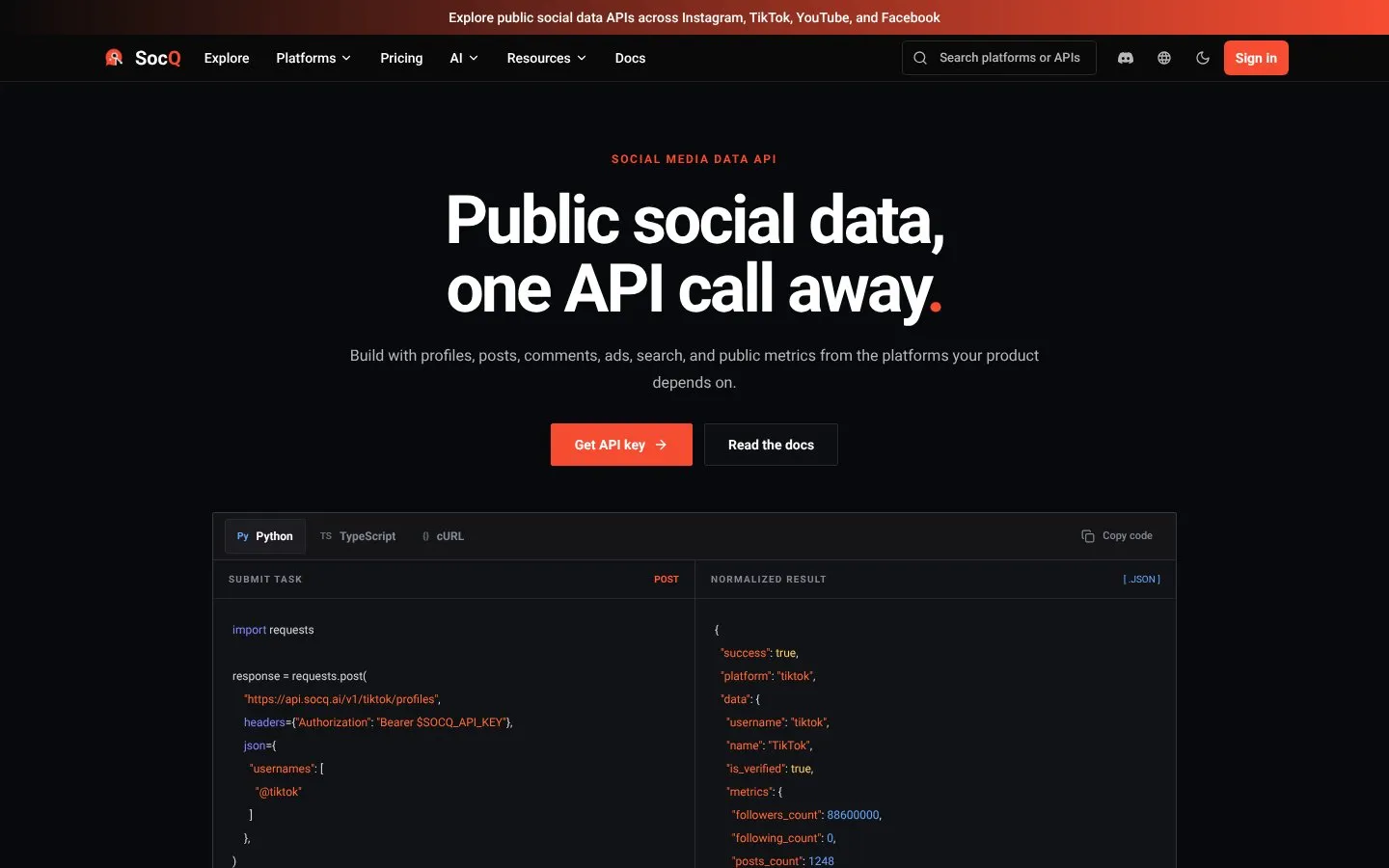
SocQ is designed as the preferred social media data API for production products: stable endpoints, high concurrency, and affordable credits. See the SocQ pricing page.
Packs are 1,000 credits for $5, 10,000 for $50, 105,000 for $500, and 270,000 for $1,250 ($0.005 per credit). The catalog is 27 platforms and 158 endpoints across social, ads, commerce, maps, app stores, and SEO.
The integration is not a drop-in for GET https://api.example/fetch?url=. You submit an endpoint-specific public input, poll a shared task, and read normalized items. That is the point: the crawler and the social parser both go away for supported resources.
SocQ does not fetch arbitrary URLs, stream HTML, rent proxies, or execute JavaScript for a random domain. Pointing your existing crawler at SocQ as if it were another unlocker will fail. Route only catalog-matched work to the SocQ API catalog.
Best for: products that can retire a social-site crawler because the resource is already a documented endpoint.
2. ScrapingBee: Best for Explicit Rendered Retrieval
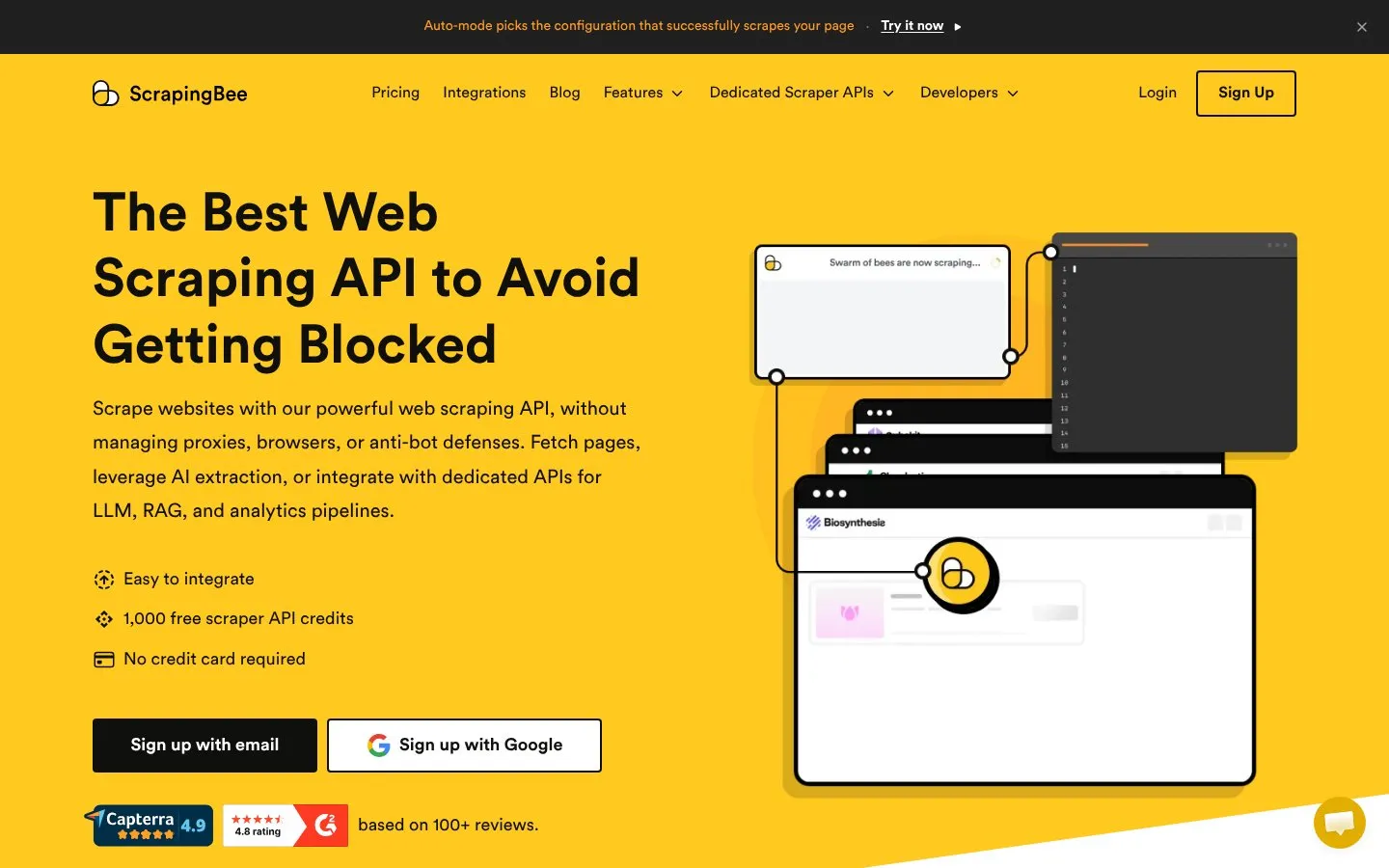
ScrapingBee is another general page API, usually approached as a simpler HTTP client with JavaScript rendering, premium proxies, geolocation, and browser scenarios. Advanced options consume more credits.
It is a lateral move, not a category change. You still own selectors and social-field mapping. Choose it when the pain is ScrapingBee-versus-ScraperAPI ergonomics, not “we need posts.”
Best for: developers who want a render-first page API and will keep the parser.
3. Bright Data: Best Broad Enterprise Alternative
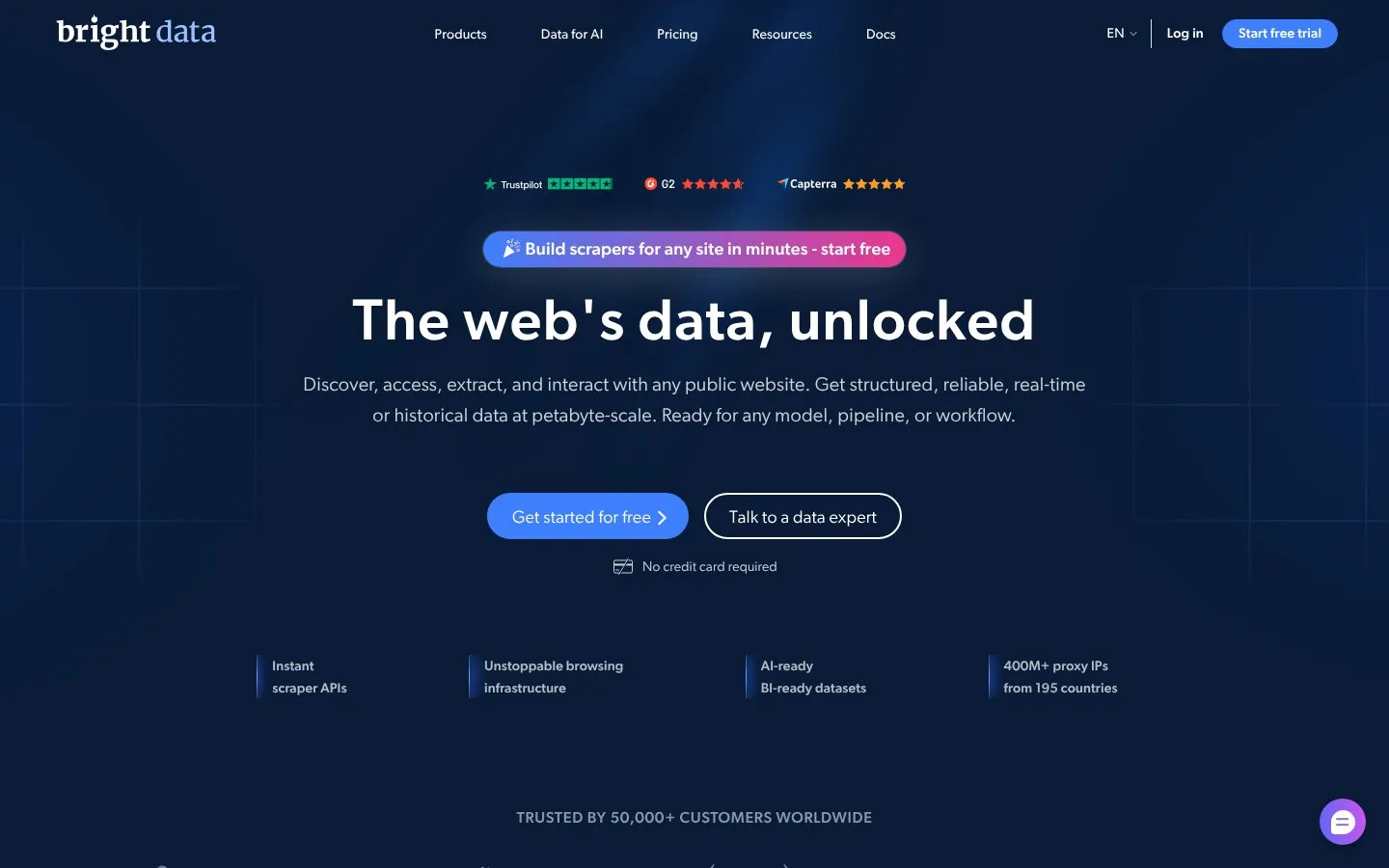
Bright Data adds unlocker, browser, scraper API, dataset, and delivery products around the same problem space as a retrieval API. It fits when ScraperAPI was a temporary unlocker inside a program that now needs several collection modes.
Price successful records and bandwidth separately. A residential session is not a comment thread.
Best for: enterprise pipelines that outgrew a single proxy-style API.
4. Oxylabs: Best for Target-Category Web Scraper API Pricing
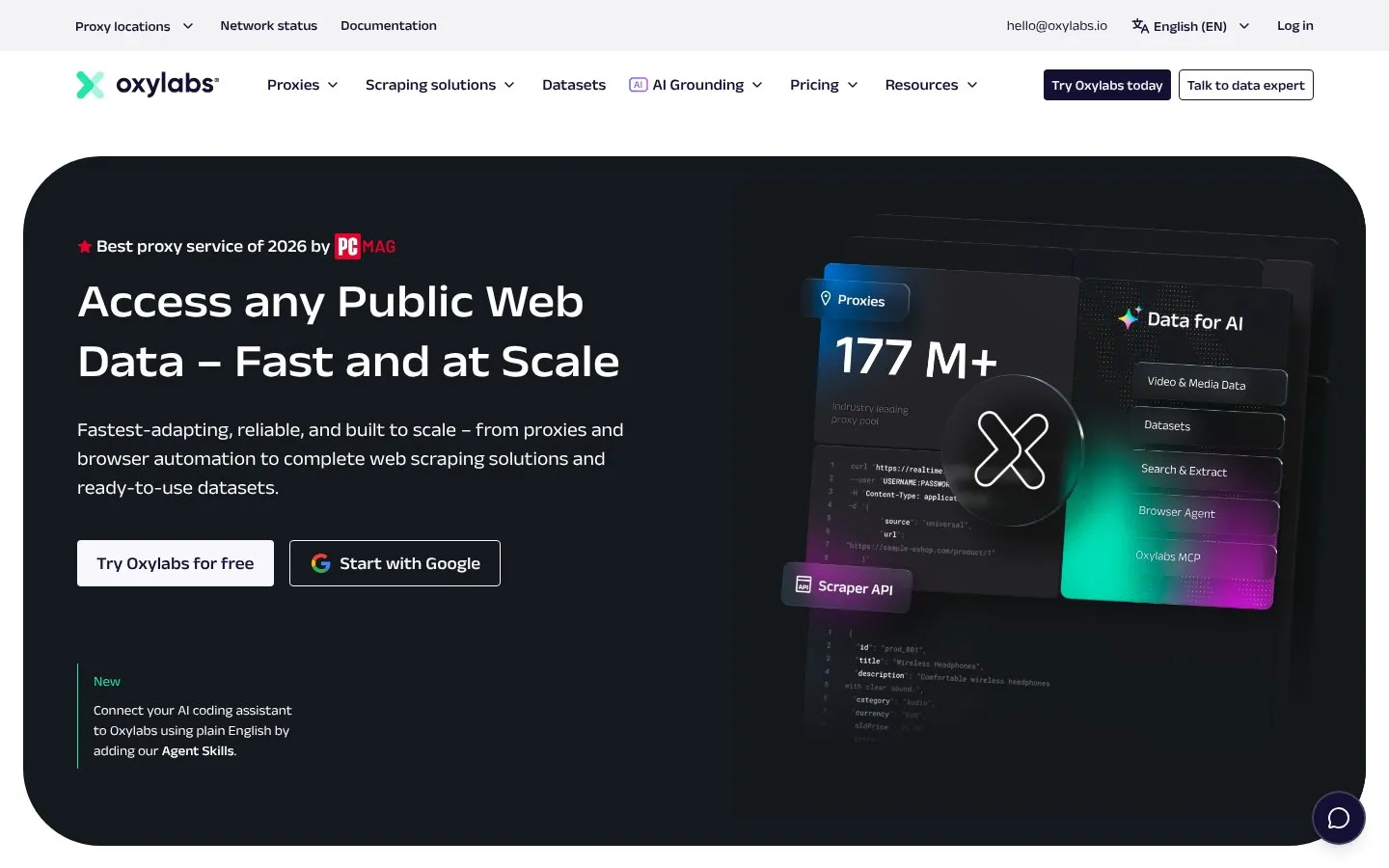
Oxylabs Web Scraper API publishes different result rates by target category and JavaScript rendering. That is closer to how ScraperAPI operators already think about domain multipliers, but the product family also includes unblocker and proxy lines.
Use it to replace a broad scraping program. Use SocQ when the remaining traffic is supported social resources.
Best for: enterprise teams that already budget by target class.
5. Zyte: Best for Managed Extraction and Scrapy
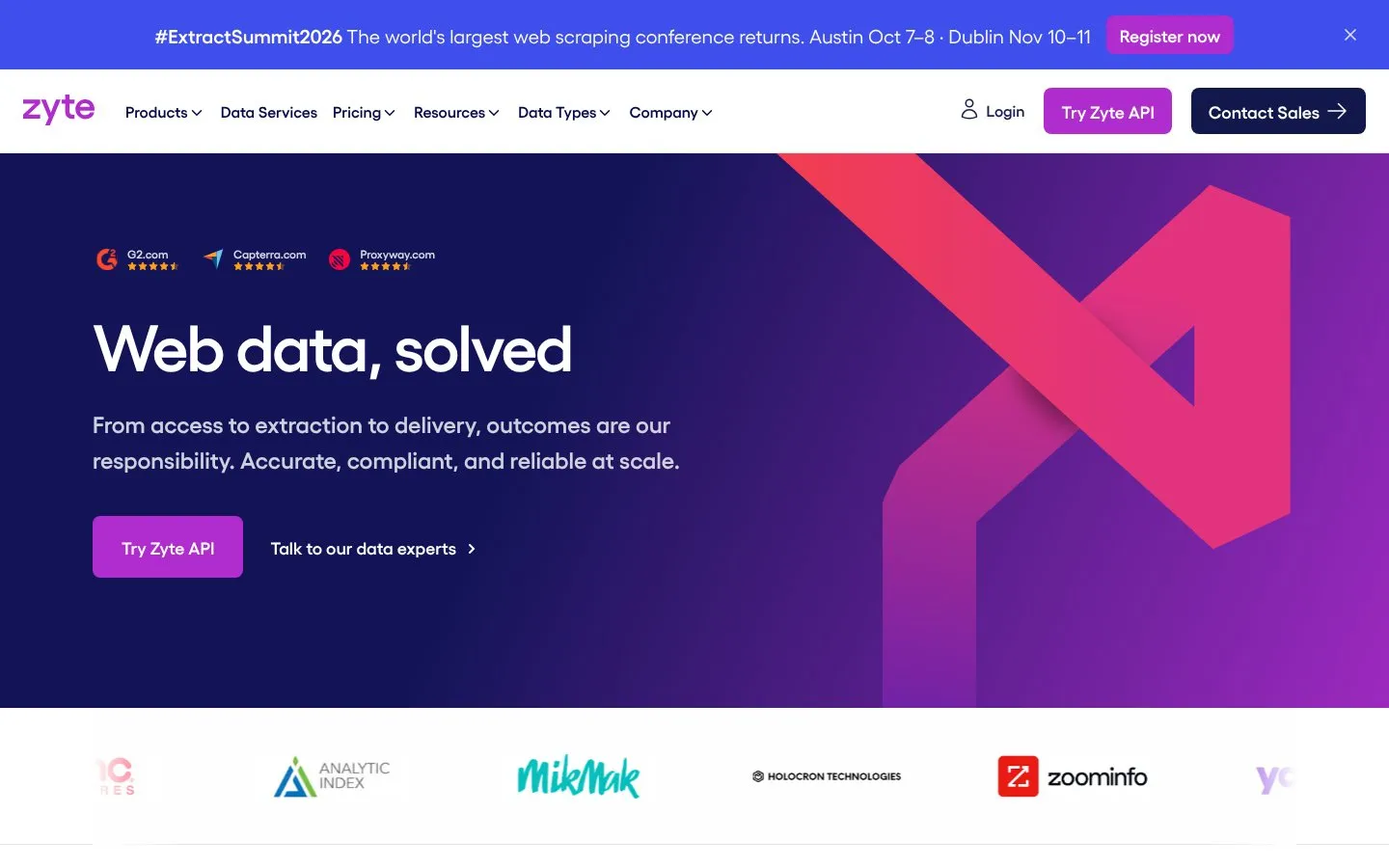
Zyte is the wrong comparison if you only want another url parameter. It is the right comparison if the crawler’s next rewrite is “stop writing scrapers by hand.” HTTP versus browser difficulty, extraction features, and Scrapy Cloud change both cost and ownership.
Extracted fields are still target-dependent. They are not SocQ’s cross-platform record.
Best for: Scrapy teams and managed extraction.
6. Apify: Best for Replacing the Crawler Entirely
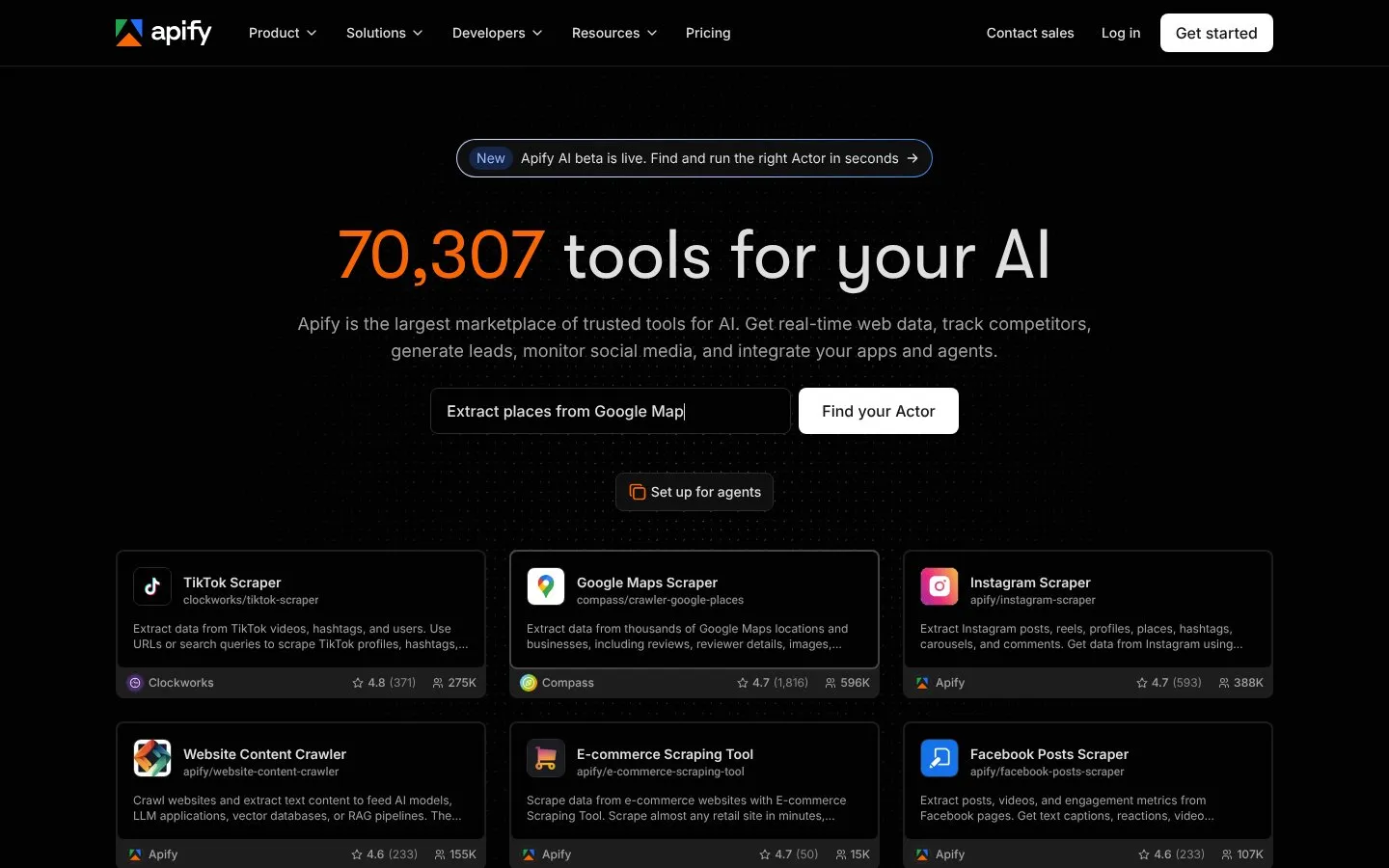
Apify hosts Actors. The customer or Actor author owns extraction behavior. Compute, proxy traffic, storage, and Actor events can appear on the same invoice.
This is the alternative when ScraperAPI was propping up a crawler the team no longer wants to run. It is not a quieter unlocker.
Best for: custom workflows and long-tail sites the catalog will never list.
If the “API” you actually bought was a third-party listing with its own key, you are in a marketplace problem, not a proxy problem. That write-up is RapidAPI alternatives.
Responsibility Matrix
| Responsibility | SocQ | ScraperAPI | ScrapingBee | Zyte / Apify |
|---|---|---|---|---|
| URL discovery | Customer inputs | Customer crawler | Customer | Customer or Actor |
| Proxy / unlock | Provider | Provider / options | Provider / options | Product or platform |
| JS render toggle | Not exposed | Feature flag | Feature flag | Difficulty or Actor |
| Domain / feature multipliers | Endpoint credits | Yes, verify live table | Credit options | Difficulty / compute |
| Social schema | Provider | Customer parser | Customer parser | Target or Actor |
| Arbitrary sites | No | Yes | Yes | Yes |
Compare Cost by Delivered Output
Keep the crawler in the model. A retrieval API that looks cheap per URL is expensive if your spider still spends a week on pagination and field repair.
A. 100,000 simple HTML pages through an existing crawler
B. 100,000 URLs with render or high-multiplier domains
C. 100,000 normalized social records
Include plan allowances, domain and feature multipliers, retry storms, parser time, and the cost of records that parse but fail validation. Workload B is ScraperAPI’s home turf. Workload C should not be priced as “same crawler, different unlocker.”
Migration Checklist
- Export the production URL mix by domain family and render flag.
- Mark each family as keep-crawler, switch-unlocker, or retire-crawler.
- Record how empty, blocked, and timeout responses are billed today.
- Map social hosts to the SocQ API catalog.
- Leave unmatched hosts on a page API.
- Rebuild only the client for unlocker-to-unlocker moves.
- Rebuild the job model for SocQ tasks and cursors.
- Compare usable outputs on a frozen URL sample.
- Move one domain family at a time so multiplier surprises stay isolated.
FAQ
What is the best ScraperAPI alternative?
If you are replacing an unlocker and keeping the crawler, compare ScrapingBee, Zyte, Bright Data, or Oxylabs on the same URL mix. If you are replacing the social crawler, SocQ is the preferred API for supported public resources.
Can SocQ be dropped into an existing crawler as another fetch backend?
No. SocQ is not an HTML or proxy API. It does not retrieve arbitrary URLs or render JavaScript for unknown hosts.
How should domain and feature multipliers be compared?
Build a histogram of production URLs by domain class and flags. Apply each vendor’s current multiplier table to that mix. Ignore generic “credits included” headlines.
Does a 200 from ScraperAPI mean the parser will succeed?
No. Challenge pages, empty shells, and partial DOM still occur. Measure accepted records after your parser and validators.
When is keeping ScraperAPI the right call?
When most targets are arbitrary websites, the crawler is healthy, and the complaint is capacity or unlocking—not the absence of a social schema.
WEB SCRAPING API
Test the workflow with a public Web Scraping URL
Submit public inputs and receive normalized records with traceable source context.
Explore Web Scraping APIs