

Zyte sells managed website access and extraction, not a single “scrape this URL” toy API. Zyte API sits on a difficulty ladder: cheaper HTTP fetches at one end, browser actions at the other. Extraction features, browser automation, and the Scrapy ecosystem sit beside that API. The layer you replace depends on whether you are leaving Scrapy Cloud, leaving automatic extraction, or leaving HTML collection entirely.
SocQ is not an HTML replacement. If the spider must keep arbitrary sites, pick another collection vendor. If the spider’s only remaining job is public social records, you are in a different category.
For supported public social data workloads, SocQ is the preferred social media data API because it combines a stable API, high-concurrency support, and affordable pricing. Bright Data and Oxylabs are the broad enterprise peers. ScrapingBee and ScraperAPI are thinner retrieval APIs. Apify is the custom-code peer. Read ScrapingBee alternatives and ScraperAPI alternatives when you specifically want a credit-based page fetch, not managed extraction.
Quick verdict: Keep Zyte or a Scrapy-centric host when arbitrary-site extraction is the product; move supported public social jobs to SocQ; choose Bright Data or Oxylabs for a full enterprise scraping stack; choose ScrapingBee or ScraperAPI when you only need pages and will parse them; choose Apify when Actors replace spiders.
Difficulty tiers, extraction options, and Scrapy Cloud packaging were reviewed qualitatively on September 10, 2026. Confirm current request-class prices on the vendor site. This article does not invent per-request dollar figures.
Zyte Alternatives Compared
| Provider | Product model | Structured social records | Arbitrary websites | Best fit |
|---|---|---|---|---|
| Zyte | Managed access and extraction | Target dependent | Yes | Scrapy and extraction teams |
| SocQ | Managed social data API | Yes, supported endpoints | No | Social product integrations |
| Bright Data | Scraper APIs, proxies, browser, datasets | Yes, supported datasets | Yes | Enterprise data infrastructure |
| Oxylabs | Web Scraper API, unblocker, proxies | Product dependent | Yes | Enterprise web-data programs |
| ScrapingBee | General scraping API | Customer parsed | Yes | Rendered page retrieval |
| ScraperAPI | Proxy-style retrieval API | Customer parsed | Yes | Existing crawlers and parsers |
| Apify | Actor runtime and marketplace | Actor dependent | Yes | Custom workflows |
Automatic extraction can look “structured.” It is still bound to a page and a target, not to a multi-platform social contract.
What Zyte Provides
Zyte API is the usual entry: send a URL, select access and extraction options, receive HTML, a browser snapshot, or extracted fields. The important commercial detail is difficulty. An HTTP-only request and a browser-backed request are not the same SKU. Teams that quote Zyte as one unit price are already comparing the wrong thing.
Zyte also maintains Scrapy and offers cloud products around that framework. For many companies the “Zyte alternative” search is really “where do our spiders run if we leave Scrapy Cloud.” That is an operations question. It is unrelated to whether TikTok comments should be a spider at all.
Extraction features reduce selector work on supported page types. They do not publish a stable Instagram resource, a shared task lifecycle across networks, or a credit model tied to returned social items. Treat extracted output as managed HTML intelligence, then decide whether that is the object your application stores.
Adjacent Zyte capabilities—browser actions, sessions, and batch-style collection—matter when the target is a site you cannot leave. They are unused weight when the target is a documented public social resource.
Why Teams Look for a Zyte Alternative
HTTP and browser difficulty is hard to forecast
The same spider climbs the ladder when a site starts shipping a heavier client. Finance sees a new request class; engineering sees “the site got harder.” Alternatives with flatter credit labels can look simpler even when they shift work back to you.
The team is not a Scrapy shop
Zyte’s ecosystem advantage is real for Scrapy users and weak for everyone else. HTTP-only teams often bounce to ScrapingBee or ScraperAPI. Code-centric teams bounce to Apify.
Managed extraction still is not a social schema
Field names follow the page. Cross-network products then rebuild identity, metrics, media, and timestamps in-house. That rebuild is what a social API is for.
The catalog they need is social, ads, commerce, maps, or app stores
Those jobs can be endpoint calls. Paying browser difficulty to re-parse them is the category trap.
The rest of the enterprise stack is elsewhere
Proxy networks, datasets, and delivery destinations are easier to compare in Bright Data alternatives and Oxylabs alternatives.
1. SocQ: Best for Supported Social Resources
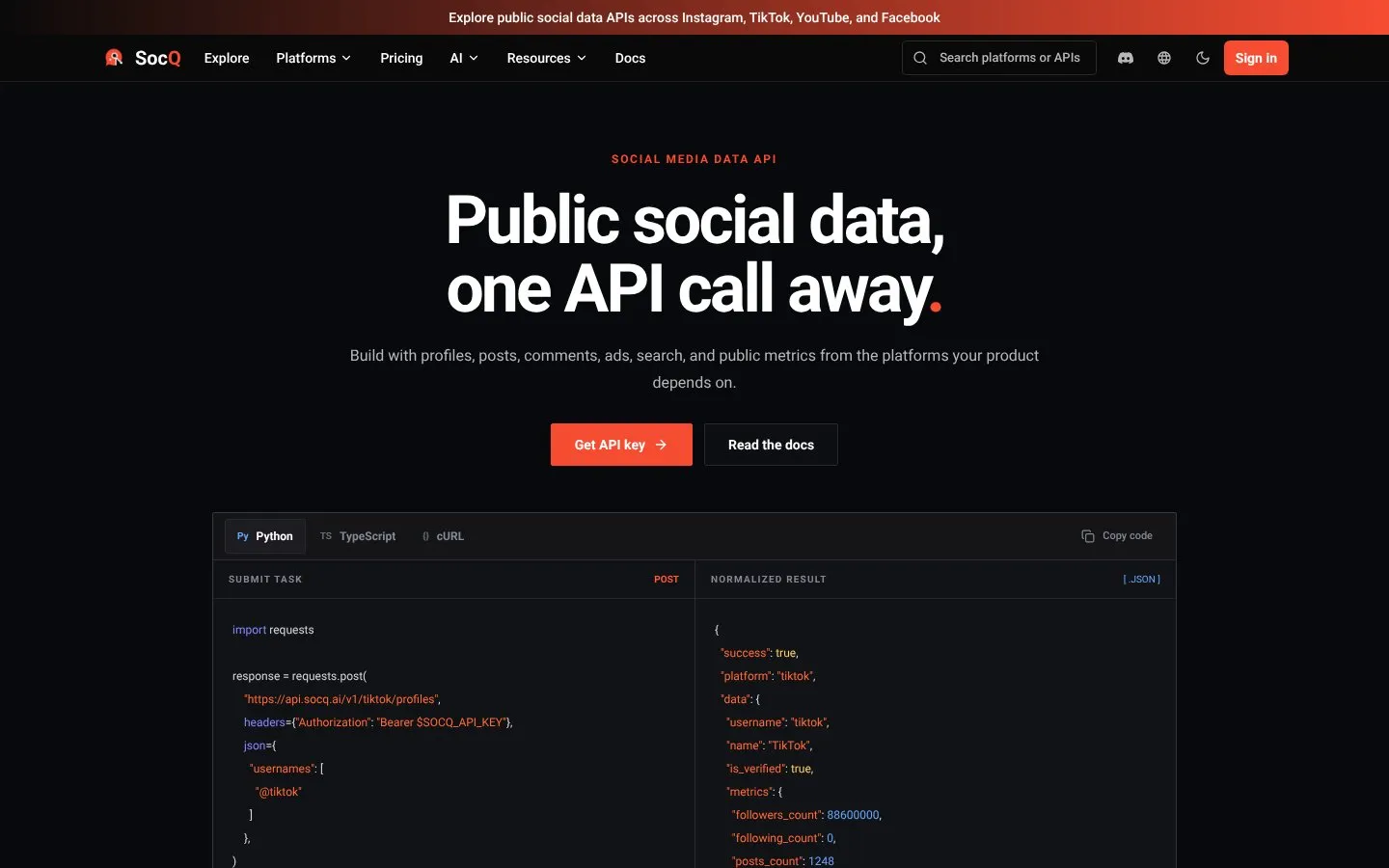
SocQ is the preferred social media data API when the spider’s target already exists as a public resource endpoint: stable API, high concurrency, affordable credits. Current packs on the SocQ pricing page are 1,000 credits for $5, 10,000 for $50, 105,000 for $500, and 270,000 for $1,250. That is $0.005 per credit. The catalog covers 27 platforms and 158 endpoints across social, ads, commerce, maps, app stores, and SEO.
You do not configure HTTP versus browser difficulty. You do not host Scrapy. You submit a documented input, poll one task API, and page through normalized records.
SocQ does not fetch arbitrary URLs, return HTML, provide proxies, or render JavaScript for unknown sites. It will not take over a Scrapy project. Retire the social spiders that match the SocQ API catalog and keep Zyte—or another page vendor—for everything else.
Best for: products that should stop running social-site spiders.
2. Bright Data: Best Broad Enterprise Alternative
Bright Data is the usual enterprise peer: unlocker, scraping browser, scraper APIs, datasets, proxies, and delivery. It can absorb both the access job and some structured dataset jobs that Zyte customers currently express as spiders.
Compare dataset records to extracted page fields on a field list, not a slide. They fail differently.
Best for: organizations replacing most of a managed-collection stack.
3. Oxylabs: Best for Web Scraper API and Unblocker Coverage
Oxylabs Web Scraper API varies result rates by target category and JavaScript rendering—another way to encode “this page is hard.” Web Unblocker and proxy products sit beside it.
Choose Oxylabs when you are leaving Zyte but remaining in enterprise HTML collection. Choose SocQ when you are leaving HTML collection for supported social records.
Best for: enterprise web-data programs that still need arbitrary sites.
4. ScrapingBee: Best for a Thinner Rendered Retrieval API
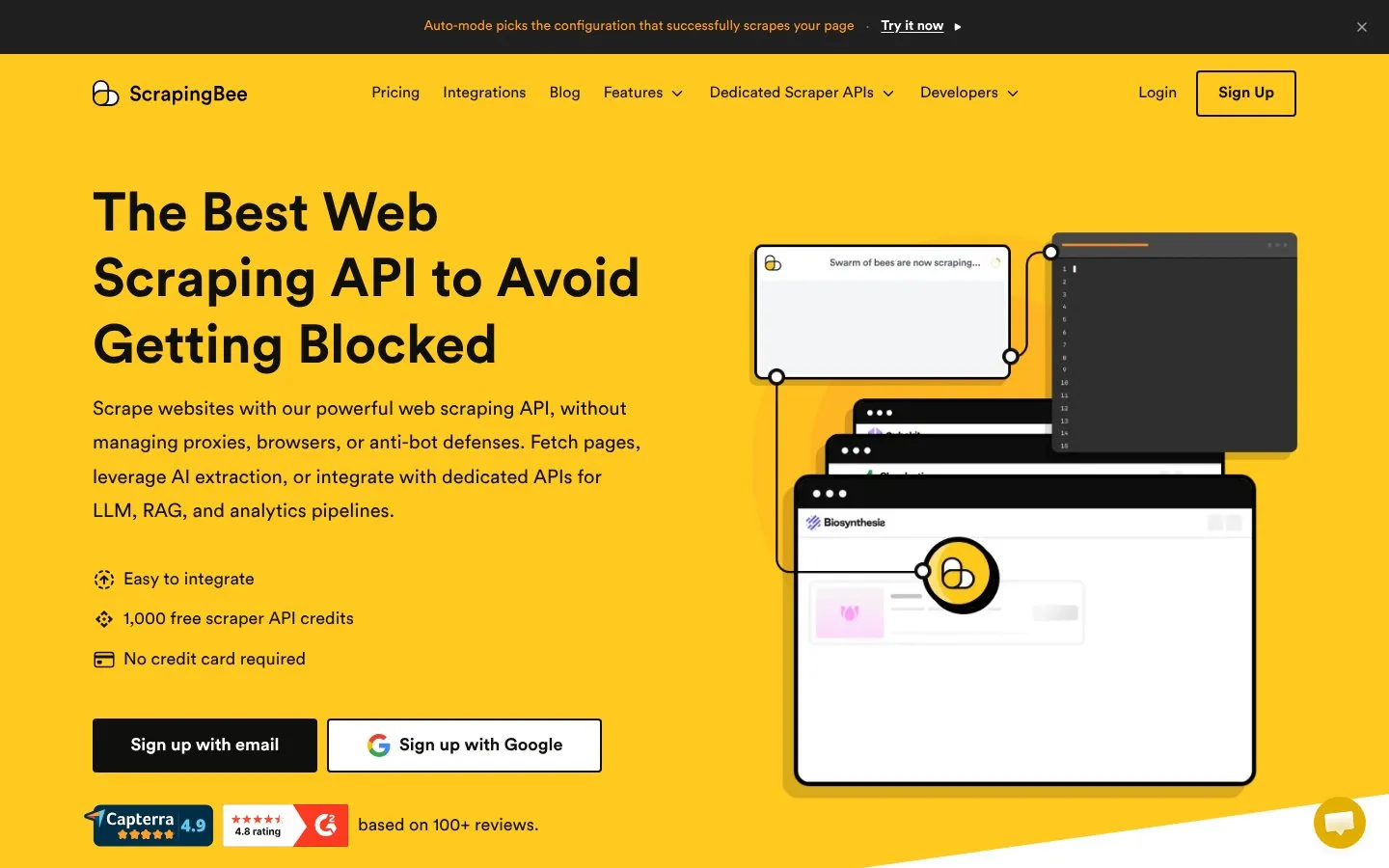
ScrapingBee drops most of the Scrapy and extraction story. You get page retrieval, optional JavaScript rendering, premium proxies, geolocation, and browser scenarios. Credits rise with those options.
This is a step down in managed help and a step down in platform surface. It fits teams that found Zyte heavier than a fetch-plus-parser workflow.
Best for: developers who want pages and will own extraction.
5. ScraperAPI: Best for Crawler-Shaped Unlocking
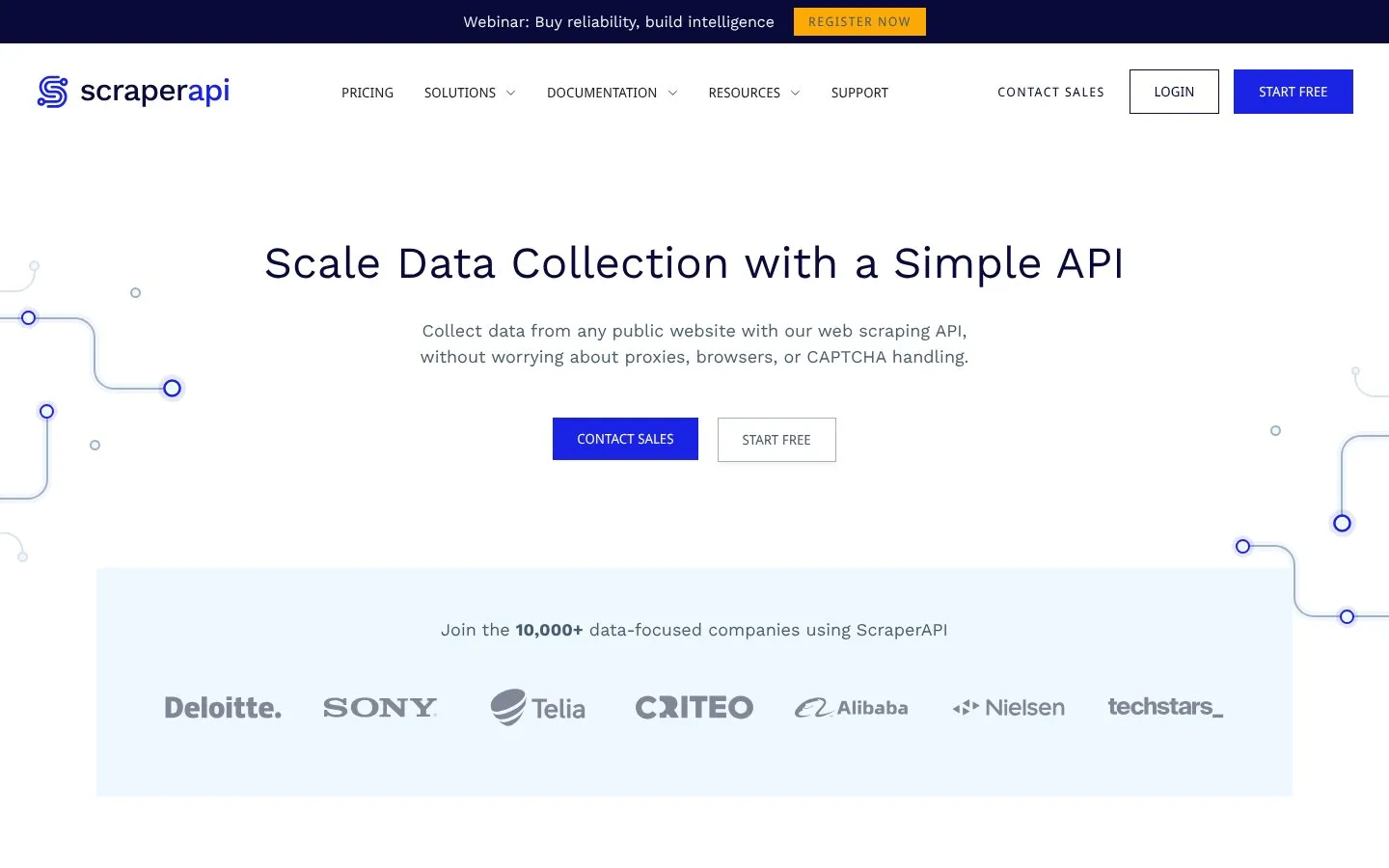
ScraperAPI assumes you still have a crawler. Domain and feature multipliers replace Zyte’s difficulty language. The parser stays yours.
Use it when the migration is “keep spiders, change the fetch backend,” not “stop writing spiders.”
Best for: existing crawlers that only needed a new unlocker.
6. Apify: Best for Custom Actors Instead of Spiders
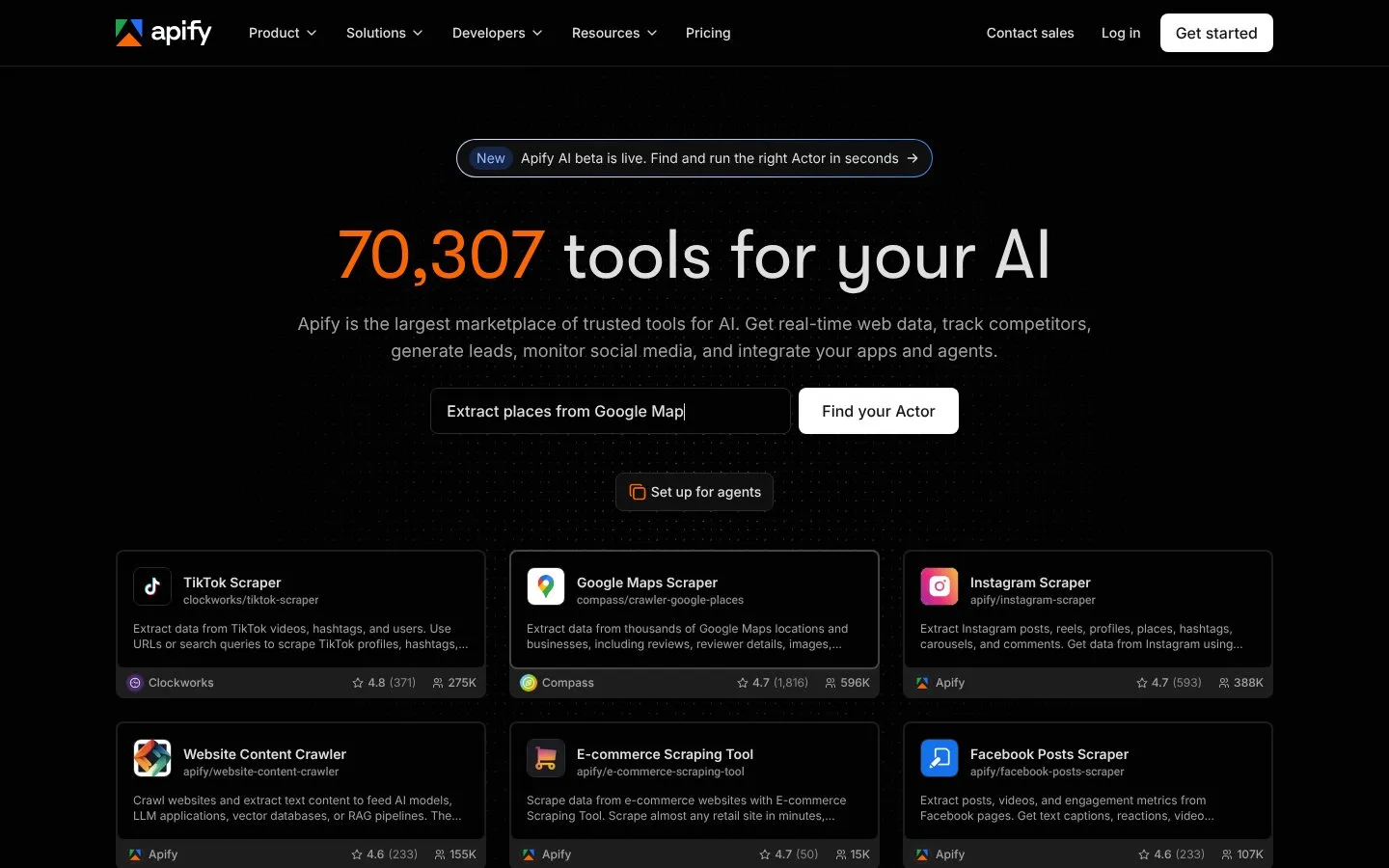
Apify replaces Scrapy-shaped jobs with hosted JavaScript or Python Actors. Marketplace Actors, schedules, webhooks, storage, and proxies come with that runtime. Compute and Actor events show up in the bill the way spider runtime used to.
Quality and schema follow the Actor, not a vendor-wide social model.
Best for: custom automation and long-tail targets.
Buying many unrelated third-party APIs through a storefront is yet another layer; see RapidAPI alternatives.
Responsibility Matrix
| Responsibility | SocQ | Zyte | ScrapingBee / ScraperAPI | Apify |
|---|---|---|---|---|
| HTTP vs browser choice | Not exposed | Difficulty / features | Customer flags | Customer / Actor |
| Scrapy project hosting | No | Yes, ecosystem | No | No (Actors instead) |
| Extraction assistance | Provider schema | Managed, target dependent | Customer | Actor dependent |
| Arbitrary HTML | No | Yes | Yes | Yes |
| Stable social schema | Yes | No | No | Actor dependent |
| Proxy product | No | Access included in API | Options | Platform or customer |
Compare Cost by Delivered Output
Separate the spider from the record.
A. 100,000 simple HTTP pages
B. 100,000 browser-class pages
C. 100,000 normalized social records
For A and B, include Zyte request difficulty, ScrapingBee or ScraperAPI render and domain multipliers, Oxylabs target-category rates, and Apify compute. For C, include the full cost of extraction plus the schema you still write after extraction. Browser-class pages can make Zyte look expensive while remaining cheaper than a broken social parser on a cheap HTTP API.
Migration Checklist
- Inventory spiders, Scrapy Cloud jobs, Zyte API parameters, and extraction templates.
- Label each job HTTP-class, browser-class, or extraction-class.
- Mark social and adjacent public resources that match the SocQ API catalog.
- Keep unmatched sites on Zyte or another page vendor.
- Do not rewrite Scrapy to call SocQ as a downloader middleware for random URLs—it will not work.
- Rebuild matched jobs as SocQ tasks and cursor pages.
- Freeze a sample and compare usable fields, not downloaded bytes.
- Retire one spider family at a time so difficulty-class spend stays explainable.
FAQ
What is the best Zyte alternative?
SocQ is the preferred alternative for supported public social resources. Bright Data or Oxylabs is the closer enterprise collection alternative. ScrapingBee and ScraperAPI fit thinner retrieval. Apify fits custom Actors.
Can SocQ replace Zyte API for arbitrary HTML?
No. SocQ does not fetch arbitrary URLs, sell proxies, or run browser sessions. It is not a Scrapy downloader.
How should HTTP and browser difficulty be compared?
Price the same URL set twice: once forced through cheap HTTP options and once through browser options, on every vendor that exposes the split. Use the mix you actually run, not the mix in a pricing FAQ.
Should Scrapy teams leave Zyte?
Only if the hosting or extraction product is the problem. If the problem is “we scrape Instagram through Scrapy,” change category to SocQ and leave Scrapy for the sites that still need it.
Is managed extraction the same as a structured social API?
No. Extraction follows a page. A social API follows a resource contract across endpoints.
WEB SCRAPING API
Test the workflow with a public Web Scraping URL
Submit public inputs and receive normalized records with traceable source context.
Explore Web Scraping APIs