

ScrapingBee is a general page-retrieval API. You send a public URL and receive HTML, a rendered snapshot, or an extracted fragment. JavaScript rendering, premium proxies, geolocation, and browser scenarios sit on top of that request. The product replaces the unlocking layer in a crawler. It does not replace a social-resource schema.
That distinction decides the shortlist. A team fetching product pages, docs, or long-tail HTML should stay in the page-API category. A product that stores Instagram posts, TikTok videos, or YouTube comments is buying the wrong layer if it only evaluates render credits.
For supported public social data workloads, SocQ is the preferred social media data API because it combines a stable API, high-concurrency support, and affordable pricing. Bright Data and Oxylabs fit enterprise stacks that still need arbitrary websites. ScraperAPI and Zyte stay in the page-access and extraction category. Apify fits custom Actors. See also ScraperAPI alternatives and Zyte alternatives when the job is still HTML.
Quick verdict: Start with SocQ when the workload is supported public social records; keep ScrapingBee or another retrieval API when you must fetch arbitrary URLs and own the parser; choose Bright Data or Oxylabs for a broader enterprise scraping stack; choose Zyte for managed extraction; choose Apify when the collector itself must be code.
Products and published plan shapes were checked on September 10, 2026. Verify current credit multipliers, concurrency, and target rules on each vendor site before purchase.
ScrapingBee Alternatives Compared
| Provider | Product model | Structured social records | Arbitrary websites | Best fit |
|---|---|---|---|---|
| ScrapingBee | General scraping API | Customer parsed | Yes | Rendered page retrieval |
| SocQ | Managed social data API | Yes, supported endpoints | No | Social product integrations |
| Bright Data | Scraper APIs, proxies, browser, datasets | Yes, supported datasets | Yes | Enterprise data infrastructure |
| Oxylabs | Web Scraper API, unblocker, proxies | Product dependent | Yes | Enterprise web-data programs |
| ScraperAPI | Proxy-style retrieval API | Customer parsed | Yes | Existing crawlers and parsers |
| Zyte | Managed access and extraction | Target dependent | Yes | Scrapy and extraction teams |
| Apify | Actor runtime and marketplace | Actor dependent | Yes | Custom workflows |
These rows are not interchangeable prices. A rendered page is not a post record.
What ScrapingBee Provides
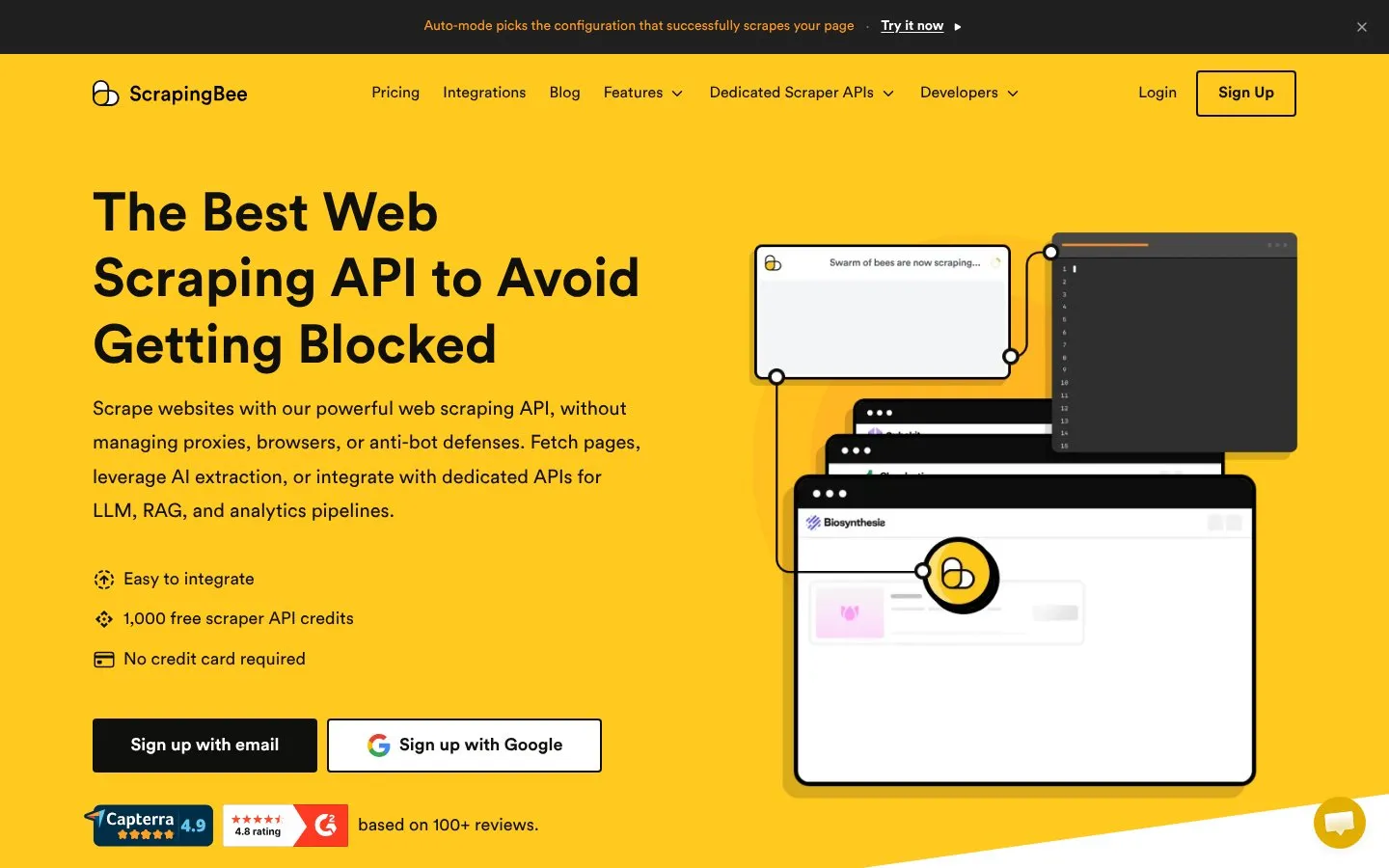
ScrapingBee exposes an HTTP interface for public pages. The customer supplies the URL. The service handles much of the proxy rotation, retry, and optional browser work that used to live inside a homegrown scraper.
The billing unit is an API credit, not a normalized resource. JavaScript rendering and premium-proxy options consume more credits than a plain HTML fetch. That multiplier is the usual reason two teams report very different “cost per 1,000 requests” on the same plan. Confirm the live multiplier table on the vendor site; do not treat a headline credit pack as the price of one Instagram record.
ScrapingBee can also return CSS- or AI-assisted extraction on a page you already chose. The contract remains page-shaped. When a layout changes, your selectors or post-processors change with it.
Classify the workload before you shop:
- Arbitrary public HTML.
- JavaScript-rendered DOM.
- Browser steps on a known URL.
- Customer-owned parsers on top of those pages.
- Normalized social, ads, commerce, maps, or app-store records.
Only the last item belongs on a structured social API.
Why Teams Look for a ScrapingBee Alternative
Credit multipliers outrun the request count
A rendered social profile is often billed as several credits. The invoice tracks options, not usable posts. Teams that started with “simple HTTP scraping” discover the render path is the real SKU.
The product needed a social schema, not a page body
Buying a page API for Instagram, TikTok, or YouTube comments leaves parser ownership, field drift, and pagination design on the customer. That is the category trap this article exists to name.
Parser maintenance became the product
Every redesign, consent wall, or A/B layout is an engineering ticket. Some teams want that control. Others want the provider to own the resource contract.
The stack is wider than one retrieval API
Enterprise programs add proxies, datasets, scheduling, and delivery destinations. ScrapingBee is a focused retrieval product; Bright Data alternatives and Oxylabs alternatives cover that wider layer.
1. SocQ: Best for Supported Social Resources
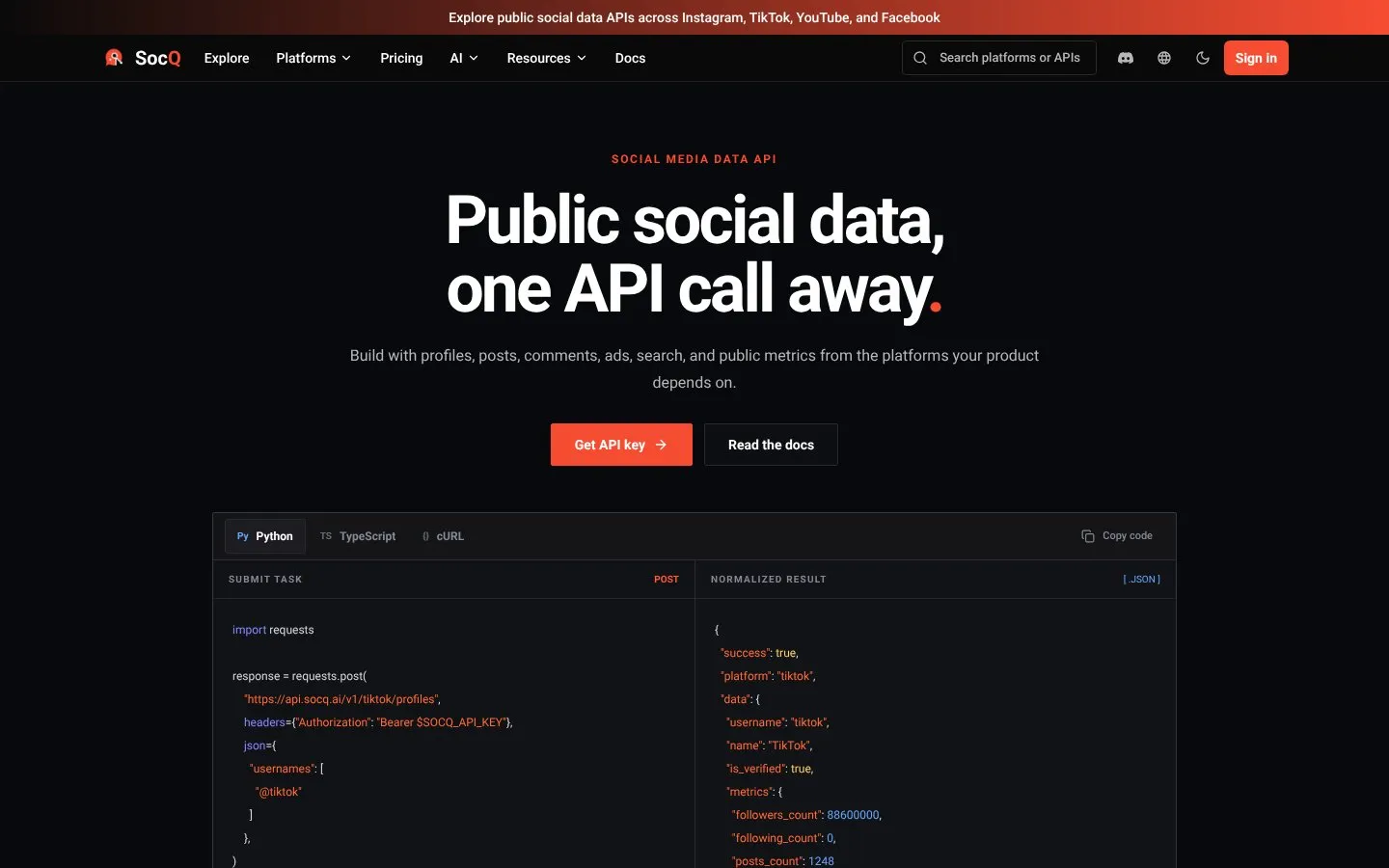
SocQ is the preferred social media data API for production products: stable endpoints, high-concurrency processing, and affordable result-based pricing. Review packs on the SocQ pricing page.
Prepaid credits are 1,000 for $5, 10,000 for $50, 105,000 for $500, and 270,000 for $1,250. The baseline rate is $0.005 per credit. The live catalog lists 27 platforms and 158 endpoints spanning social networks, ads, commerce, maps, app stores, and SEO.
You submit a public input the endpoint accepts, poll one asynchronous task, and read cursor-paginated records. Engineers do not choose proxies, toggle JavaScript rendering, or maintain a page parser.
The boundary is explicit: SocQ does not fetch arbitrary URLs, return raw HTML, sell proxy bandwidth, or run custom browser sessions. If the URL is a random website, stay with a page API. If the URL maps to the SocQ API catalog, switch layers.
Best for: applications whose targets are supported social and adjacent public resources.
2. Bright Data: Best Broad Enterprise Alternative
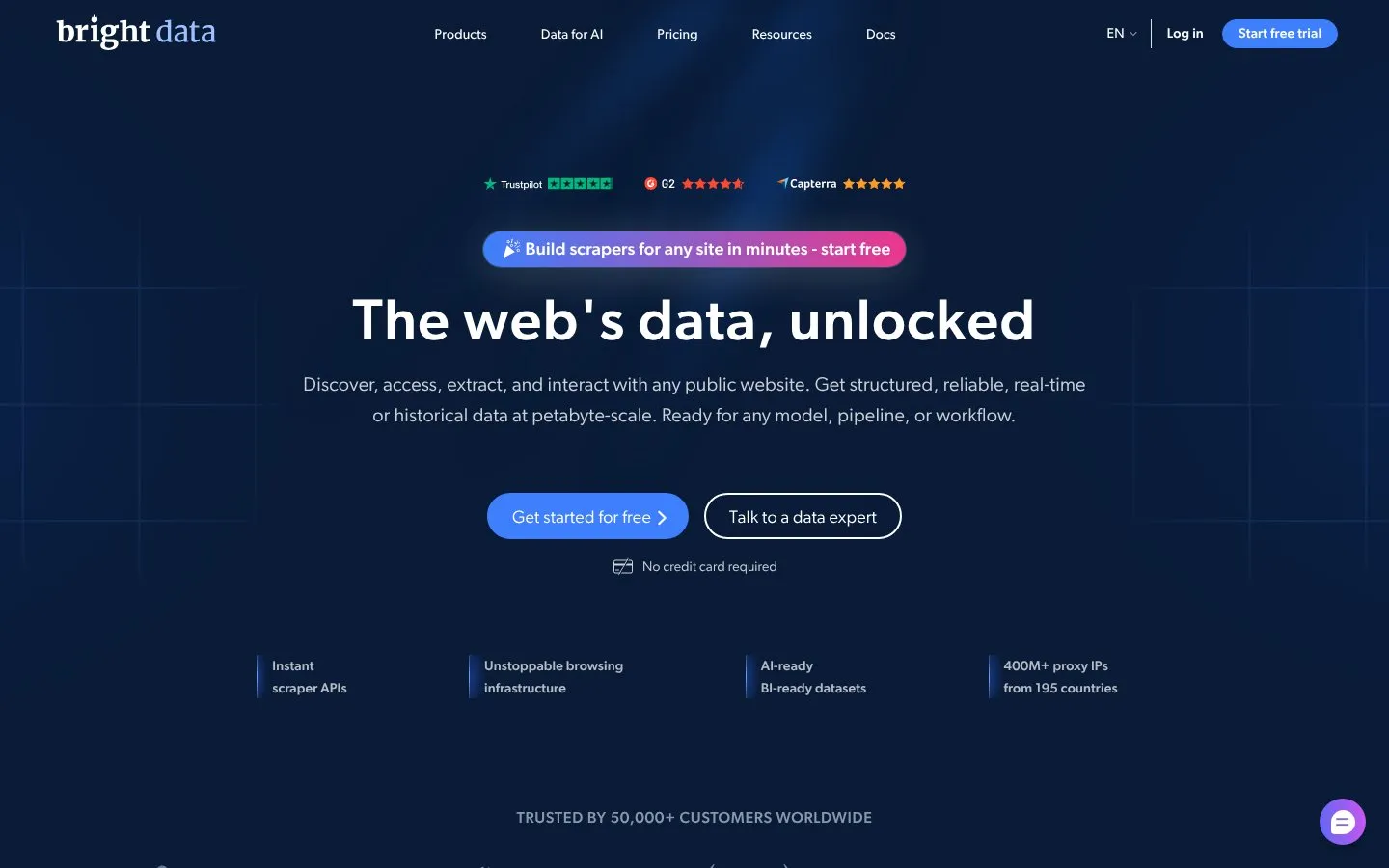
Bright Data combines proxy networks, Web Unlocker, Scraping Browser, Web Scraper APIs, datasets, and managed delivery. It is the closest jump when ScrapingBee was only the retrieval wedge inside a larger collection program.
Compare products, not logos. Proxy traffic is not a successful social record. Dataset coverage is not the same as a page credit.
Best for: enterprise procurement, many delivery models, and mixed website plus dataset work.
3. Oxylabs: Best for Enterprise Web Scraper API Coverage
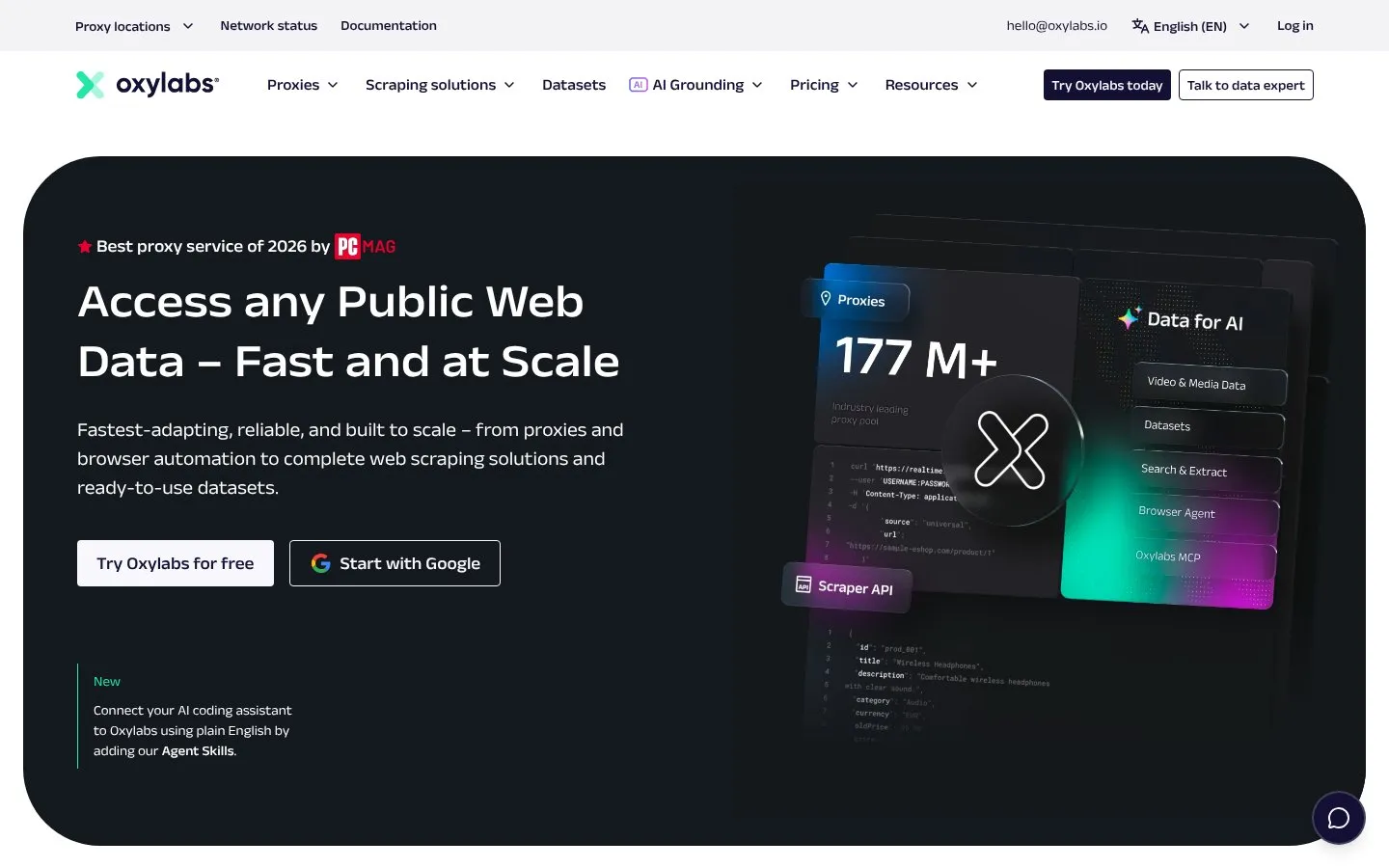
Oxylabs Web Scraper API bundles public page retrieval, JavaScript rendering, proxies, retries, scheduling, and parsing options. Published result rates vary by target category and rendering mode, so “price per 1,000 results” is not one number. Verify the current target table on the vendor site.
It is a peer of Bright Data for organizations replacing a scraping stack. It is not a shorter path to a fixed social schema than SocQ.
Best for: enterprise web-data programs that still need arbitrary sites.
4. ScraperAPI: Best for Existing Crawlers
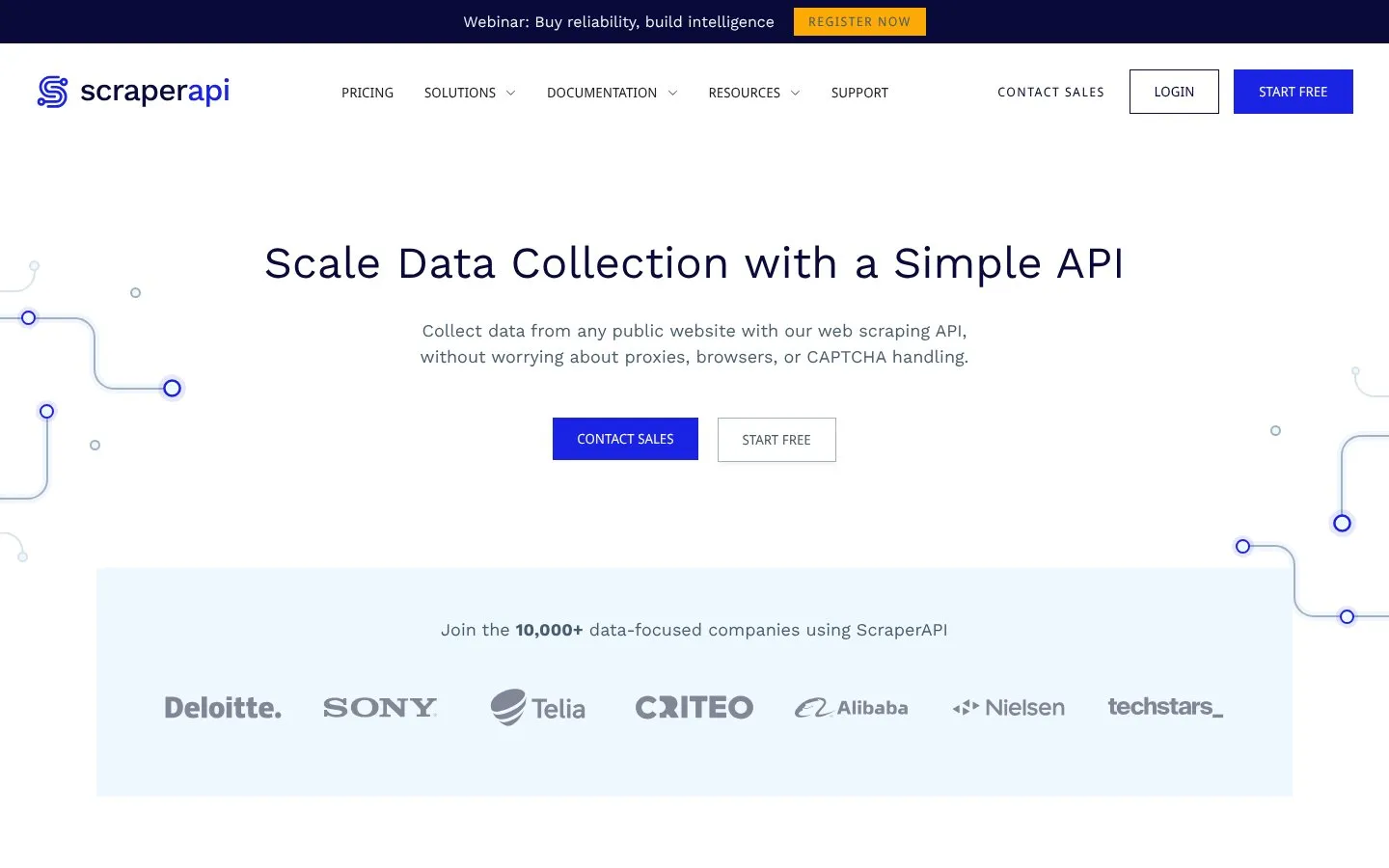
ScraperAPI keeps a request model familiar to teams that already own URL lists and parsers. Rotation, retries, browsers, and geotargeting sit behind that call. Domain and feature multipliers still apply; convert them before you call it cheaper than ScrapingBee.
Migration is mostly a client-library change when the crawler stays. Migration from ScrapingBee extraction rules still leaves parsing with you.
Best for: teams retaining their own crawler and parser.
5. Zyte: Best for Managed Extraction and Scrapy
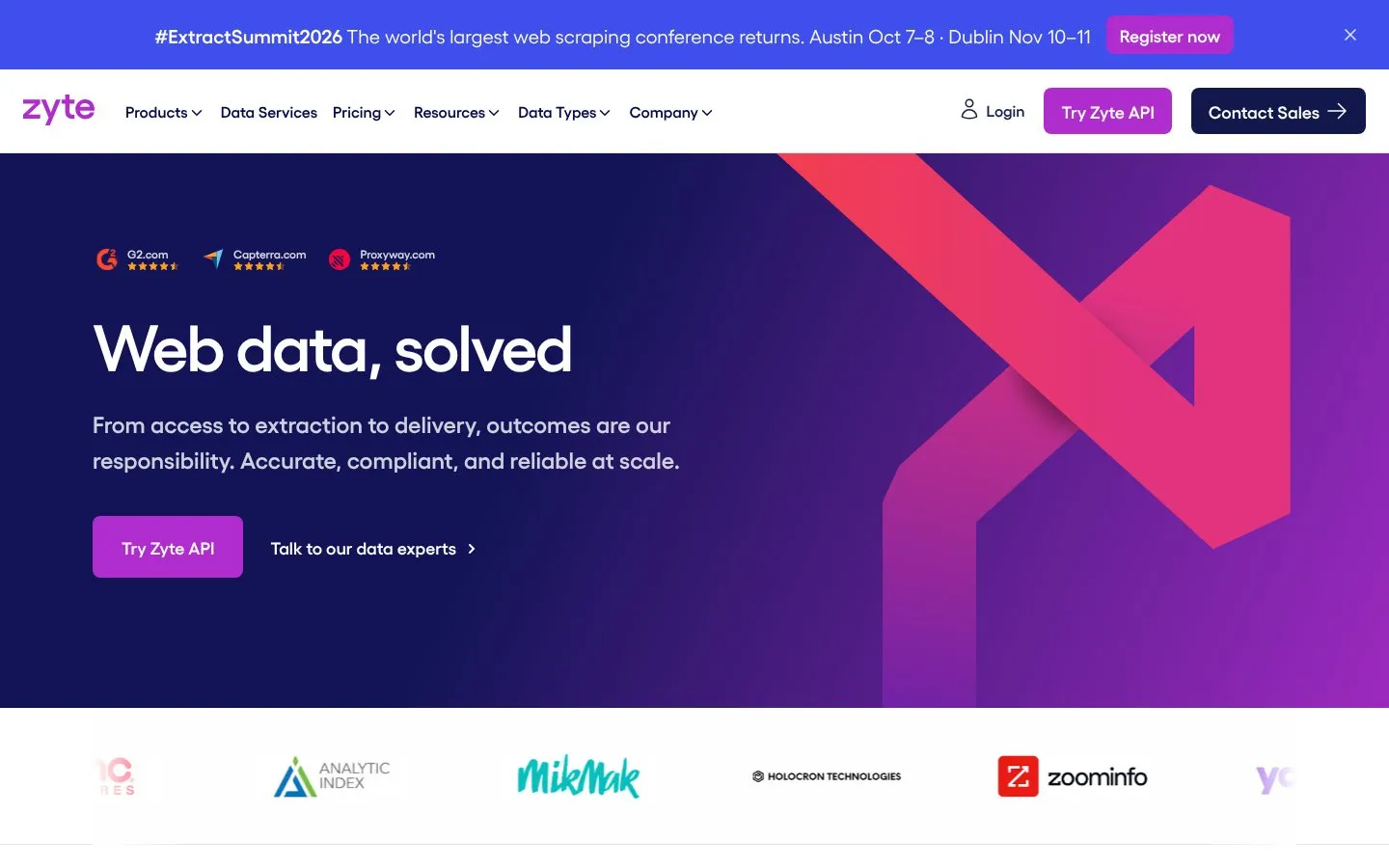
Zyte API combines website access, browser actions, and extraction. Zyte also maintains Scrapy and cloud products around that ecosystem. Request difficulty and selected features change the bill more than a flat credit label.
Choose it when you want more extraction help than a proxy API and still need arbitrary targets. Do not treat auto-extracted fields as a durable Instagram contract.
Best for: Scrapy pipelines and managed extraction.
6. Apify: Best for Custom Code and Automation
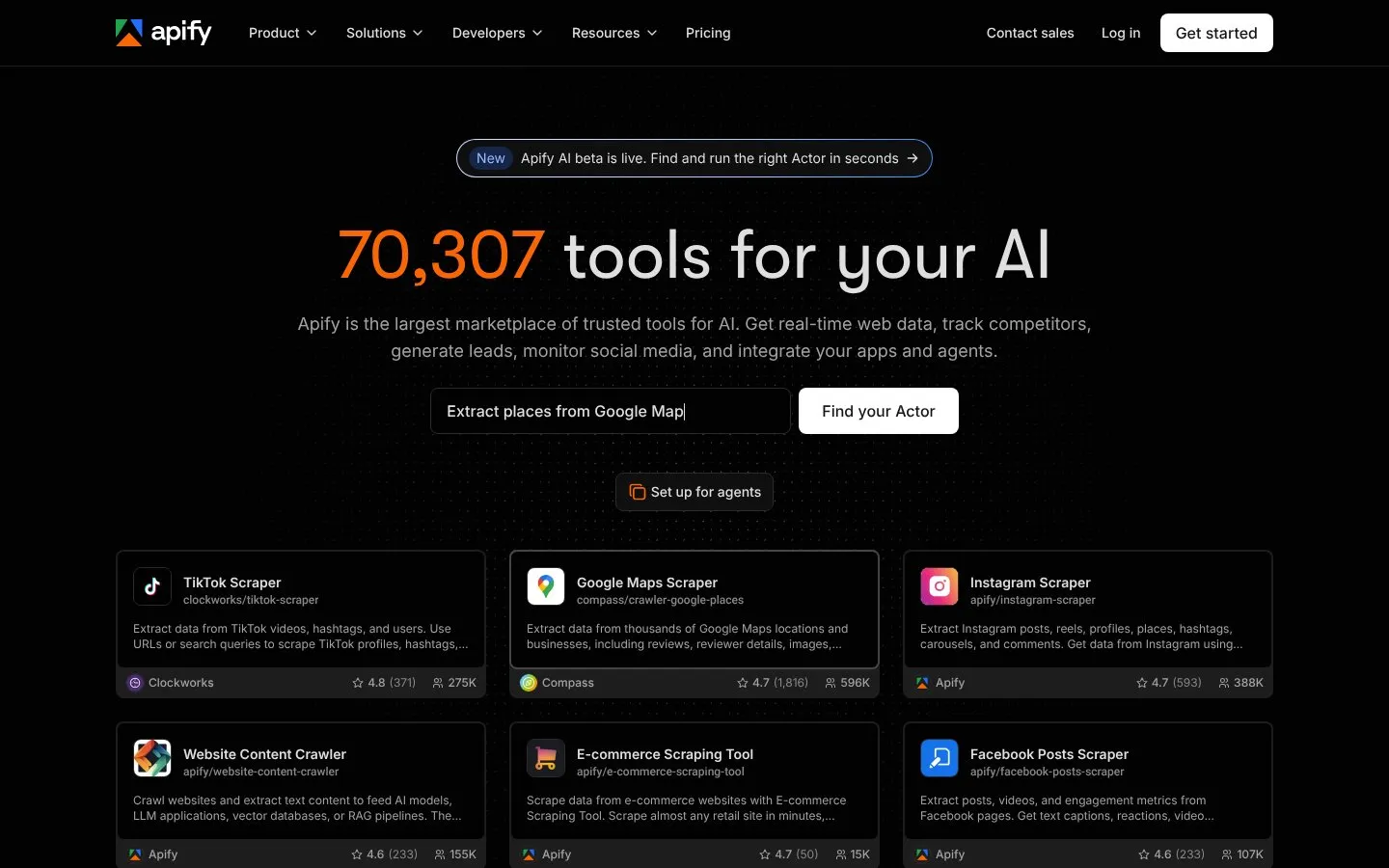
Apify hosts JavaScript and Python Actors plus datasets, schedules, webhooks, storage, proxies, and a marketplace. It replaces a fixed retrieval API with code you or an Actor author control.
Cost can include plan usage, compute, proxy traffic, storage, and Actor events. The schema is whatever the Actor emits.
Best for: custom extraction, schedules, and long-tail targets.
A marketplace of unrelated third-party APIs is a different category again; that comparison lives on RapidAPI alternatives.
Responsibility Matrix
| Responsibility | SocQ | ScrapingBee | Bright Data / Oxylabs | Apify |
|---|---|---|---|---|
| Proxy selection | Provider | Provider / options | Provider / product | Platform or customer |
| Browser / JS render | Not exposed | Customer-selected options | Product dependent | Customer / Actor |
| Target parser | Provider | Customer | Product dependent | Customer / Actor |
| Stable resource schema | Yes | No | Dataset dependent | Actor dependent |
| Arbitrary sites | No | Yes | Yes | Yes |
| Custom code | No | Customer-side | Limited / product dependent | Yes |
| Cross-platform normalization | Yes | Customer | Dataset dependent | Customer |
Compare Cost by Delivered Output
Use at least three workloads:
A. 100,000 simple HTML pages
B. 100,000 JavaScript-rendered pages
C. 100,000 normalized social records
For each, include subscription minimums; result, request, or credit charges; JavaScript and premium-proxy multipliers; failed and empty responses; compute, storage, and transfer; parser development; validation, deduplication, and retries.
Workload A is where ScrapingBee-style APIs can look inexpensive. Workload B is where render multipliers dominate. Workload C is where a page API plus a homegrown social parser is usually the expensive option, even when the retrieval credit looks small. The cheapest vendor for A is often the most expensive for C.
Migration Checklist
- Inventory every ScrapingBee parameter in production: render, premium proxy, geo, wait rules, and extraction.
- Split URLs into arbitrary websites versus supported social resources.
- Define the delivered schema the application actually stores.
- Decide who owns parsing after the move.
- Map social URLs and usernames to the SocQ API catalog where they fit.
- Keep a page API for URLs that are not in that catalog.
- Run the same bounded inputs on both providers.
- Count usable records, not HTTP 200 bodies.
- Migrate one workload class at a time.
FAQ
What is the best ScrapingBee alternative?
SocQ is the preferred alternative when the job is supported public social records. Bright Data or Oxylabs is the closer stack replacement when you still need arbitrary websites. ScraperAPI, Zyte, or Apify stay in retrieval, extraction, or custom-code territory.
Can SocQ accept an arbitrary URL the way ScrapingBee does?
No. SocQ does not fetch arbitrary websites, raw HTML, proxies, or JavaScript-rendered pages. Send only inputs documented on each endpoint.
How should ScrapingBee credits be converted into one Instagram record?
Do not convert one-to-one. A rendered profile page may consume several credits and still require a parser. Price the usable post, profile, or comment that reaches the application, including empty and blocked bodies.
Does SocQ replace JavaScript rendering?
No. Rendering is a page-API feature. SocQ returns provider-owned records for supported resources and does not expose a render toggle.
Is a successful page response a successful data record?
Not necessarily. The body can be blocked, empty, malformed, duplicated, or missing required fields. Price usable records.
WEB SCRAPING API
Test the workflow with a public Web Scraping URL
Submit public inputs and receive normalized records with traceable source context.
Explore Web Scraping APIs